
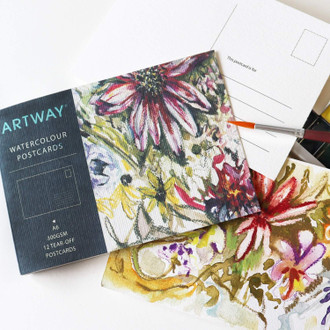
Watercolour Postcards: Paint Your Summer and Post It Home
11th Aug 2026
The best thing you bring back from a trip doesn't have to come from the gift shop. A watercolour postcard, painted in ten quiet minutes with a harbour, a hillside, or your morning coffee in front of you, says far more than a fridge magnet ever could. And unlike the hundred photos on your phone, you actually look at the thing you're painting. That's the quiet magic of watercolour postcards. They slow the day down and hand you a souvenir worth keeping.
If you've never painted outdoors before, summer is the easiest time to start. The light is generous, you've got time on your hands, and a postcard is small enough that it never feels like a serious undertaking.
Why a postcard is the perfect place to start
A blank sketchbook page can feel like a lot to fill. A postcard doesn't. It's a small, friendly rectangle you can finish before your tea goes cold, which is exactly why it's such a good way to build a painting habit. You're not making a masterpiece, you're catching a moment.
The format does you a favour, too. Because the space is limited, you're forced to pick out what matters, the shape of a roofline, the colour of the sea, the one tree that caught your eye, and leave the rest. That editing is a skill professional artists work hard at, and a postcard teaches it to you without you noticing.
A travel kit that fits in one hand
You need surprisingly little. A pocket palette holds all the colour you need and slips neatly into a pocket. Add a round brush or two (a quill mop if you prefer a softer, fuller brush), a couple of pencils for your first light lines, and the whole lot tucks into the Eco-Eco pencil case, which is made from recycled material and tough enough to live in the bottom of a rucksack.
The one thing worth being fussy about is the paper. Ordinary paper buckles and pills the moment it gets wet, and the colours sink in flat and lifeless.
This is where our new Watercolour Postcards book comes in. It's twelve A6 cards of lightly textured 300gsm watercolour paper, heavy enough to hold a wash and take a second layer without cockling. The sheets tear off cleanly when they're dry, and the back of every card is already printed as a proper postcard, with lines for your message, a space for the address, and a box for the stamp. Paint the front, write the back, post it. 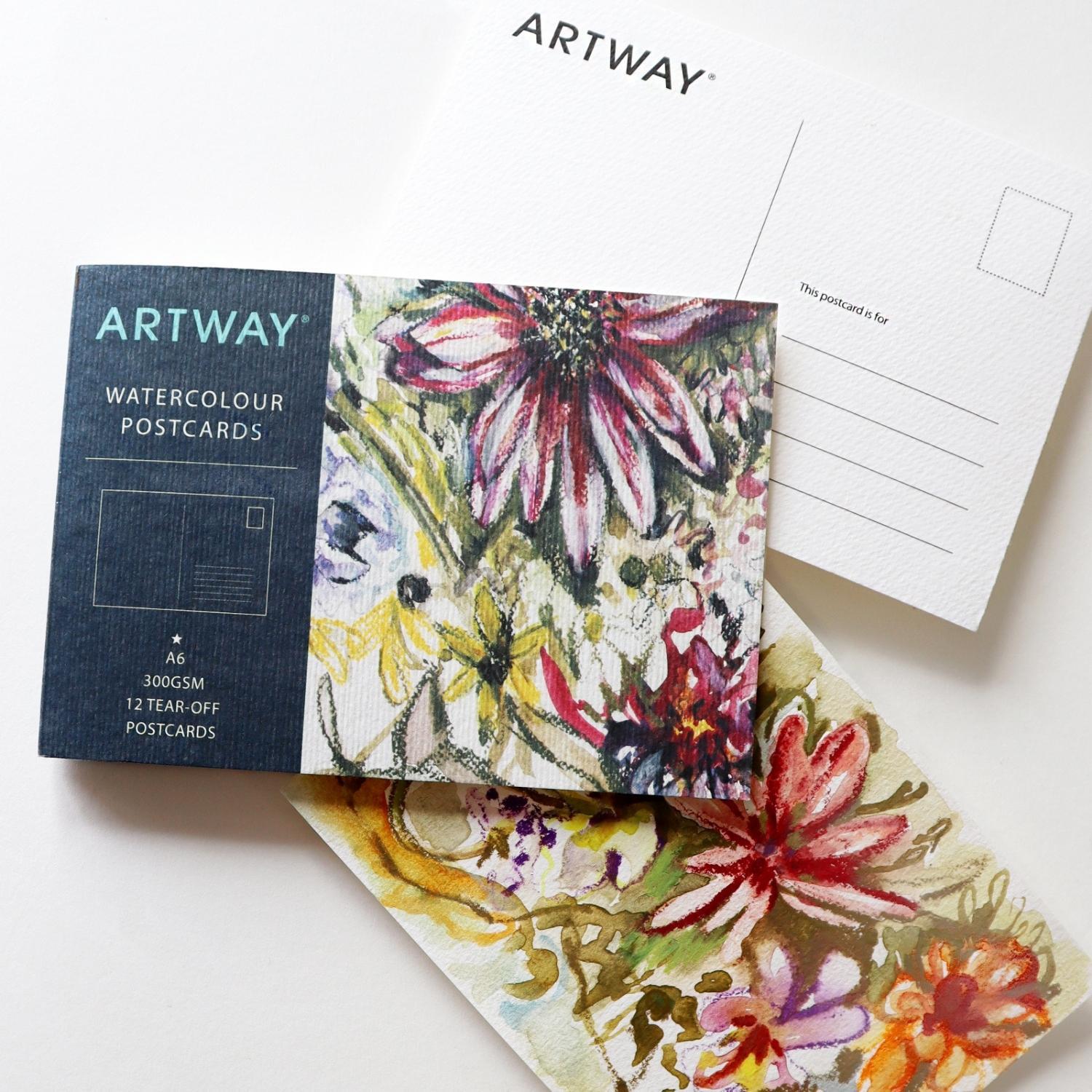
If you run a shop or studio, it also comes as a retail pack, a counter display box of books ready to sit by the till.
How to catch a scene in ten minutes
Keep it loose. Start with a light pencil line to place the horizon and the two or three biggest shapes, then go straight in with your palest washes, sky, water, distant hills. Let those dry for a moment while you enjoy the view, then drop in your darker, richer pigment for the details that bring it to life. Working light to dark this way is the whole trick with watercolour, and on a surface this size you'll have it finished in the time it takes to drink a coffee.
Don't chase perfection. A wobbly line, or a bloom where two colours ran together, is part of the charm, and the looser paintings are often the ones people love most.
Then actually post it
Here's the part people forget. Post it. Write a line on the back, add a stamp, and send it to someone who'll be delighted to find a tiny original painting on the doormat instead of another bill. If you'd rather keep them, a series of painted postcards from one trip makes a lovely little set to pin up when you're home.
However you use them, you'll come home with something no camera roll can match.
More new arrivals to explore
The Watercolour Postcards book is one of several new arrivals we've just brought in. If you're kitting out for summer or simply fancy a browse, take a look at what else has landed.
Painted something you're proud of? Share it with us on Instagram using #artwaysupplies. We love seeing where a postcard ends up.